Hier finden Sie den Blog von Diplom- Betriebswirt Karl-Helmut E. Zermin, Fachmann für Öffentlichkeitsarbeit und Werbung, Journalist, Autor, Blogger, Socialmediamanager und Redenschreiber in Berlin
Als Barack Obama am 10. Januar 2017 seine letzte Rede als amerikanischer Präsident hielt, verabschiedete er sich mit den Worten, die das Motto seiner Amtszeit waren: Yes, we can! Dieser Satz ist zum geflügelten Wort geworden und die achtjährige Präsidentschaft des ersten Afroamerikaners im Weißen Haus erscheint angesichts der Turbulenzen um seinen Nachfolger fast als eine goldene Zeit.
Der bekannte Fotojournalist Pete Souza hat Obama über mehr als 12 Jahre vor und hinter den Kulissen der Politik begleitet. Ob im Wahlkampf oder auf Staatsbesuch, ob offiziell auf dem roten Teppich oder im Lift allein mit seinen Töchtern: Souzas Bilder aus nächster Nähe zeigen einen sympathischen, trotz allem Druck erstaunlich locker und gut gelaunt auftretenden Mann, der sich dennoch nie anbiedert oder die Würde seines Amtes verrät. Dem Fotografen ist ein sehr persönliches Porträt gelungen, im Wechselspiel aus Nähe und Distanz, großer Weltpolitik und familiärer Wärme.
Kurzvita
Über Pete Souza (Autor)
Pete Souza ist ein bekannter US-amerikanischer Fotojournalist, der bereits unter Ronald Reagan gearbeitet hat. Seit 2005 hat er Barack Obamas politische Karriere, nach dessen Wahl zum Präsidenten als Cheffotograf des Weißen Hauses, begleitet. Sein Buch The Rise of Barack Obama (2008) stand lange auf der New York Times Bestseller-Liste.
Über Barack Obama (Vorwort)
Barack Obama wurde 1961 in Honolulu, Hawaii, geboren. Er war von 2009 bis 2017 der 44. Präsident der Vereinigten Staaten.
Obama ist ein auf US-Verfassungsrecht spezialisierter Rechtsanwalt. Im Jahr 1992 schloss er sich der Demokratischen Partei an, für die er 1997 Mitglied im Senat von Illinois wurde. Bei der Präsidentschaftswahl des Jahres 2008 errang er die Kandidatur seiner Partei und setzte sich dann gegen den Republikaner John McCain durch. Mit seinem Einzug in das Weiße Haus im Januar 2009 bekleidete erstmals ein Afroamerikaner das Amt des Präsidenten. Am 10. Dezember 2009 erhielt Barack Obama den Friedensnobelpreis.
Er lebt mit seiner Frau und seinen zwei Töchtern Sasha und Malia in Washington.
Als Barack Obama am 10. Januar 2017 seine letzte Rede als amerikanischer Präsident hielt, verabschiedete er sich mit den Worten, die das Motto seiner Amtszeit waren: Yes, we can! Dieser Satz ist zum geflügelten Wort geworden und die achtjährige Präsidentschaft des ersten Afroamerikaners im Weißen Haus erscheint angesichts der Turbulenzen um seinen Nachfolger fast als eine goldene Zeit.
Der bekannte Fotojournalist Pete Souza hat Obama über mehr als 12 Jahre vor und hinter den Kulissen der Politik begleitet. Ob im Wahlkampf oder auf Staatsbesuch, ob offiziell auf dem roten Teppich oder im Lift allein mit seinen Töchtern: Souzas Bilder aus nächster Nähe zeigen einen sympathischen, trotz allem Druck erstaunlich locker und gut gelaunt auftretenden Mann, der sich dennoch nie anbiedert oder die Würde seines Amtes verrät. Dem Fotografen ist ein sehr persönliches Porträt gelungen, im Wechselspiel aus Nähe und Distanz, großer Weltpolitik und familiärer Wärme.
Relive the extraordinary Presidency of Barack Obama through White House photographer Pete Souza’s behind-the-scenes images and stories in this #1 New York Times bestseller–with a foreword from the President himself.
During Barack Obama’s two terms, Pete Souza was with the President during more crucial moments than anyone else–and he photographed them all. Souza captured nearly two million photographs of President Obama, in moments highly classified and disarmingly candid.
Obama: An Intimate Portrait reproduces more than 300 of Souza’s most iconic photographs with fine-art print quality in an oversize collectible format. Together they document the most consequential hours of the Presidency–including the historic image of President Obama and his advisors in the Situation Room during the bin Laden mission–alongside unguarded moments with the President’s family, his encounters with children, interactions with world leaders and cultural figures, and more.
Souza’s photographs, with the behind-the-scenes captions and stories that accompany them, communicate the pace and power of our nation’s highest office. They also reveal the spirit of the extraordinary man who became our President. We see President Obama lead our nation through monumental challenges, comfort us in calamity and loss, share in hard-won victories, and set a singular example to “be kind and be useful,” as he would instruct his daughters.
This book puts you in the White House with President Obama, and will be a treasured record of a landmark era in American history.
* * *
A deluxe limited slipcase edition is also available.
By Bernadette Meehan, International Programs, Obama Foundation
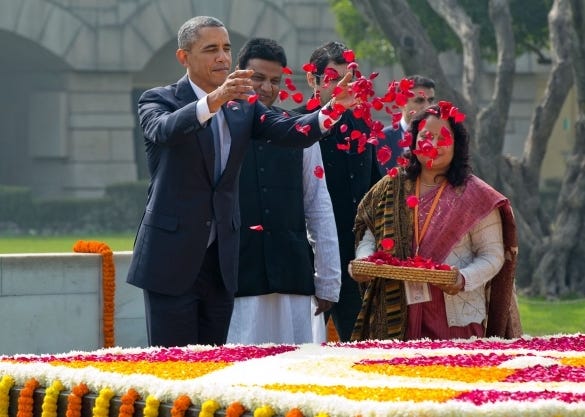
This year, President Obama has hosted events with young people in Germany, Indonesia, and Brazil; now, he is going to India.
As one of the most culturally, religiously, linguistically, and ethnically diverse nations on earth, India’s democracy shows us the collective strength of engagement within and across communities. Most of India’s 1 billion people are under 35 years old, an engaged and passionate generation that includes Members of Parliament, Village Sarpanchs, scientists, artists, athletes, entrepreneurs, and civic leaders who are finding innovative ways to create positive change across India — change that benefits the world. For these reasons, we are excited to announce that on December 1, the Obama Foundation will host a Town Hall in New Delhi, India with President Obama and hundreds of young Indian leaders from across the country. The Town Hall will expand the conversation about what it means to be an active citizen and make an impact — and how the Obama Foundation can support emerging leaders in this effort.
“Young Indians like you aren’t just going to define the future of this nation, you’re going to shape the world.” — President Obama to young people New Delhi, India on January 27, 2015
President Obama believes that countries are strongest when we empower our young people — because ultimately, they’re the ones who will shape our future. Our India trip will build on the progress we made last month at ourinaugural global Summit in Chicago, where we convened young leaders working to create change in their communities. We hosted inspiring Indians like Trisha Shetty, who started an organization called She Says with the aim to educate and empower women and men to take action against sexual abuse. We invited leaders like Sanchana Krishnan, who works with communities to normalize mental health issues and empower people to get the help they seek. Sanchana organizes a series of personal storytelling events called Living Stories, where people discuss their mental health adventures and misadventures, promoting knowledge and empathy through storytelling. We loved meeting these civic innovators and hearing about their changemaking initiatives, and with their feedback we will continue to develop programs that will engage, empower, connect, and spotlight people that are tackling challenges in their communities.
I have been incredibly impressed by the young people we are getting to know around the world. Trisha and Sanchana represent a generation of leadership that is focused on working with their communities, not just for them. It is this community-based change that will empower young leaders to make their neighborhoods and nations live up to their potential. I can’t wait to hear more about the unique initiatives young Indian leaders have started in their communities.
By Bernadette Meehan, International Programs, Obama Foundation
This year, President Obama has hosted events with young people in Germany, Indonesia, and Brazil; now, he is going to India.
As one of the most culturally, religiously, linguistically, and ethnically diverse nations on earth, India’s democracy shows us the collective strength of engagement within and across communities. Most of India’s 1 billion people are under 35 years old, an engaged and passionate generation that includes Members of Parliament, Village Sarpanchs, scientists, artists, athletes, entrepreneurs, and civic leaders who are finding innovative ways to create positive change across India — change that benefits the world. For these reasons, we are excited to announce that on December 1, the Obama Foundation will host a Town Hall in New Delhi, India with President Obama and hundreds of young Indian leaders from across the country. The Town Hall will expand the conversation about what it means to be an active citizen and make an impact — and how the Obama Foundation can support emerging leaders in this effort.
“Young Indians like you aren’t just going to define the future of this nation, you’re going to shape the world.” — President Obama to young people New Delhi, India on January 27, 2015
President Obama believes that countries are strongest when we empower our young people — because ultimately, they’re the ones who will shape our future. Our India trip will build on the progress we made last month at ourinaugural global Summit in Chicago, where we convened young leaders working to create change in their communities. We hosted inspiring Indians like Trisha Shetty, who started an organization called She Says with the aim to educate and empower women and men to take action against sexual abuse. We invited leaders like Sanchana Krishnan, who works with communities to normalize mental health issues and empower people to get the help they seek. Sanchana organizes a series of personal storytelling events called Living Stories, where people discuss their mental health adventures and misadventures, promoting knowledge and empathy through storytelling. We loved meeting these civic innovators and hearing about their changemaking initiatives, and with their feedback we will continue to develop programs that will engage, empower, connect, and spotlight people that are tackling challenges in their communities.
I have been incredibly impressed by the young people we are getting to know around the world. Trisha and Sanchana represent a generation of leadership that is focused on working with their communities, not just for them. It is this community-based change that will empower young leaders to make their neighborhoods and nations live up to their potential. I can’t wait to hear more about the unique initiatives young Indian leaders have started in their communities.


 Dieser Titel erscheint am: